Your driveway is the first thing people see — and it should last 30 years, not 5. Runsview Landscaping builds interlocking driveways in Toronto the right way: deep base, premium pavers, polymeric sand, and zero shortcuts on any step of the process.
Asphalt driveways in Toronto typically last 15–20 years before they start cracking, heaving, and looking worn. When that point comes, most homeowners face a choice: re-asphalt for another decade, or upgrade to interlocking for the last time.
Interlocking driveways last 30+ years with minimal maintenance, dramatically improve curb appeal, and add real resale value to Toronto properties. In a city where a semi-detached can list for $1M+, a $15,000 driveway investment makes measurable financial sense.
Beyond aesthetics and longevity, interlocking handles Toronto's climate better than any other driveway surface. Individual pavers can flex slightly with freeze-thaw movement, and if a section ever does settle, individual units can be lifted and re-levelled without replacing the entire driveway — something you can't do with asphalt or concrete.
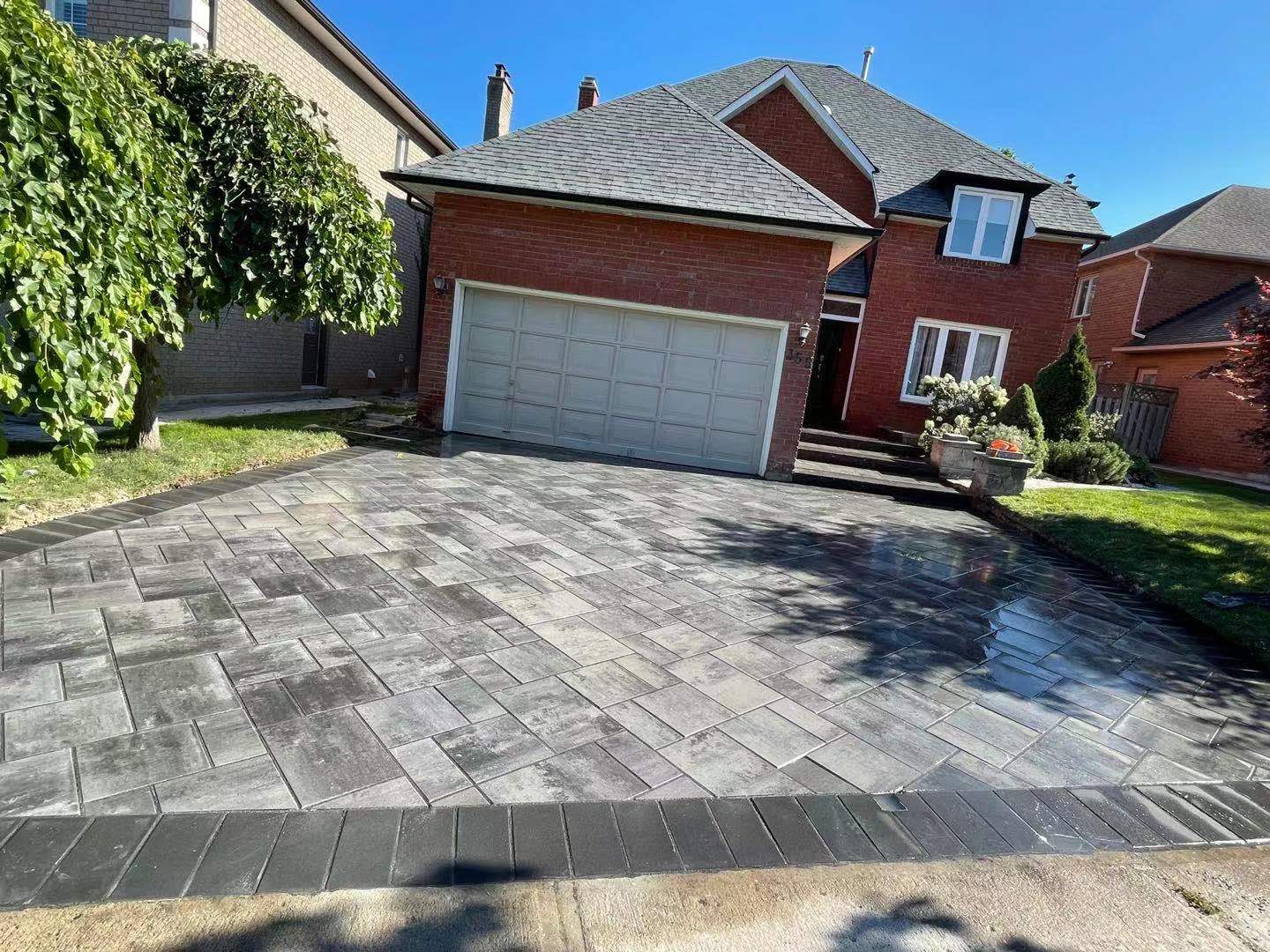
No two Toronto lots are the same. We design driveways that fit your specific frontage, style, and budget — from a basic single-car upgrade to a full estate entrance.
Toronto's narrower lots — especially in East York, The Beach, and older West End neighbourhoods — often have single-car driveways of 8–10 feet wide. We maximize the visual impact with strong pattern choices and clean border work that make narrow driveways look intentional and polished.
Double-wide driveways in North York, Scarborough, and newer Toronto suburbs give us room to work with layout, patterns, and design zones. A contrasting border, a medallion feature, or a two-tone colour combination can turn a standard driveway into a statement piece.
One of the most requested jobs in Toronto: widening an existing driveway to accommodate a second car. We match your existing paver as closely as possible and ensure the new section is properly tied into the old base with no visible seam line or height difference.
Replacing old asphalt, cracked concrete, or deteriorated interlocking with new. We remove and dispose of the old material, assess and correct the base, and install your new driveway properly from scratch. The most common project type we do in Toronto.
Permeable pavers and open-joint systems allow water to pass through the driveway surface into the sub-base and back into the ground. Toronto's stormwater management rules are increasingly favouring permeable surfaces, and some areas offer incentives for them.
In-ground LED paver lights or low-voltage pathway lighting along the driveway edges adds safety, security, and a premium look. We can integrate lighting into any driveway project at the time of install — much cleaner than adding it after.
The single biggest reason interlocking driveways fail in Toronto is insufficient base depth. Clay-heavy Toronto soil expands when frozen and contracts when thawed — and if the base beneath your driveway isn't deep enough to isolate the pavers from that movement, you'll see cracking, shifting, and sinking within a few years.
Toronto is a city of distinct neighbourhoods — each with its own lot sizes, architectural styles, and challenges for driveway contractors. Here's how we approach the most common Toronto areas we work in.
Larger lots and wider driveways are common in North York. Double-wide installations, turnarounds, and multi-vehicle driveways are a specialty here. Many North York homes also have decorative entrance features — pillars, lighting, and armour stone borders — that we integrate into driveway projects.
Scarborough offers a mix of bungalows on wider lots and newer infill developments. Driveway replacements in Scarborough often involve widening existing narrow driveways to accommodate modern vehicle sizes. The area also has a high proportion of interlocking driveways already, so matching or beating existing quality standards matters.
Narrow lots, mature trees, and tight access are common challenges in East York and The Beach. We work carefully around tree roots, use hand tools where machinery can't fit, and design driveway solutions for the narrower frontages typical of these older Toronto neighbourhoods.
Etobicoke's mix of postwar bungalows and newer executive homes gives us a wide range of project types. Older homes often need full base replacement — not just a surface overlay — while newer builds may just need an upgrade from builder-grade to premium pavers and patterns.
West Toronto neighbourhoods like Roncesvalles, The Junction, and High Park feature semi-detached homes with narrow driveways shared between properties. We navigate mutual driveway situations with care, ensuring proper drainage and clear property line boundaries.
Mid-century modern homes in Don Mills often feature long, sweeping driveways that benefit enormously from quality interlocking. The architectural style pairs well with clean-lined pavers and minimal border treatments that complement the home's aesthetic without competing with it.
Every Runsview driveway follows the same proven process — from first call to final cleanup.
We visit your Toronto property, measure the driveway area, check drainage conditions, review Toronto's driveway width regulations for your specific address, and discuss design and material options. You get a detailed written quote — not a ballpark number.
We help you choose the right paver, pattern, and border treatment for your home's style. We bring samples and reference photos so you can visualize the finished result before any material is ordered or deposited paid.
Existing asphalt, concrete, or old interlocking is removed and hauled away. We excavate to the correct depth for Toronto's frost conditions — typically 12–14 inches for driveways. Soil is removed and graded to ensure proper drainage away from the house.
Granular B sub-base is installed and plate-compacted in lifts. Granular A base course goes on top and is compacted again. Both layers are checked with a level before bedding sand is added. This is the most important part of the job and the part we never rush.
Pavers are laid in your chosen pattern on a screeded 1-inch sand bed. We run string lines and laser levels across the full driveway to ensure consistent elevation and pattern alignment. All cuts are made with a wet saw — no chipping.
Plate compactor runs over the finished surface to seat the pavers. Polymeric sand is swept into all joints and activated with water. Edge restraints are checked and secured. Your driveway and surrounding property are left completely clean.
Interlocking driveways in Toronto typically run $10,000–$25,000+ depending on size, material, and site conditions. Toronto lots often require extra base depth due to clay soil. Narrow driveways in older neighbourhoods can be done well for $8,000–$12,000. Wide North York driveways with decorative features can reach $20,000–$30,000. We provide free, itemized written quotes for every project.
The City of Toronto requires a permit for any new driveway access from the street or changes to existing curb cuts. They also regulate driveway widths — typically no wider than 6 metres (approximately 20 feet) or 50% of the lot frontage. Driveways cannot cover more than a certain percentage of the front yard. We handle permit inquiries and can advise on what's allowable for your specific address before work begins.
If you see sunken sections, heaving along the edges, or areas that move when you walk on them, the base has failed and needs to be replaced — not just the surface. If the surface is faded or stained but is flat and stable, a resand and reseal may be sufficient. We assess this honestly at the free quote stage and never recommend full replacement when it isn't needed.
Avoid calcium chloride and rock salt on interlocking — both can cause surface scaling and efflorescence. Use sand or kitty litter for traction, or magnesium chloride in small amounts if you need a deicer. The best approach is a plastic or rubber-blade snow shovel and sand. If you get interlocking sealed, the sealer adds an extra layer of protection against salt damage.
We typically recommend waiting 24–48 hours after polymeric sand activation before driving on your new driveway. The pavers themselves can handle vehicle weight immediately, but the polymeric sand needs time to fully cure. We'll walk you through specific care instructions at project completion.
Tell us about your Toronto project and we'll get back to you with a detailed, no-surprise quote within 24 hours.
We'll be in touch within 24 hours with your free quote.